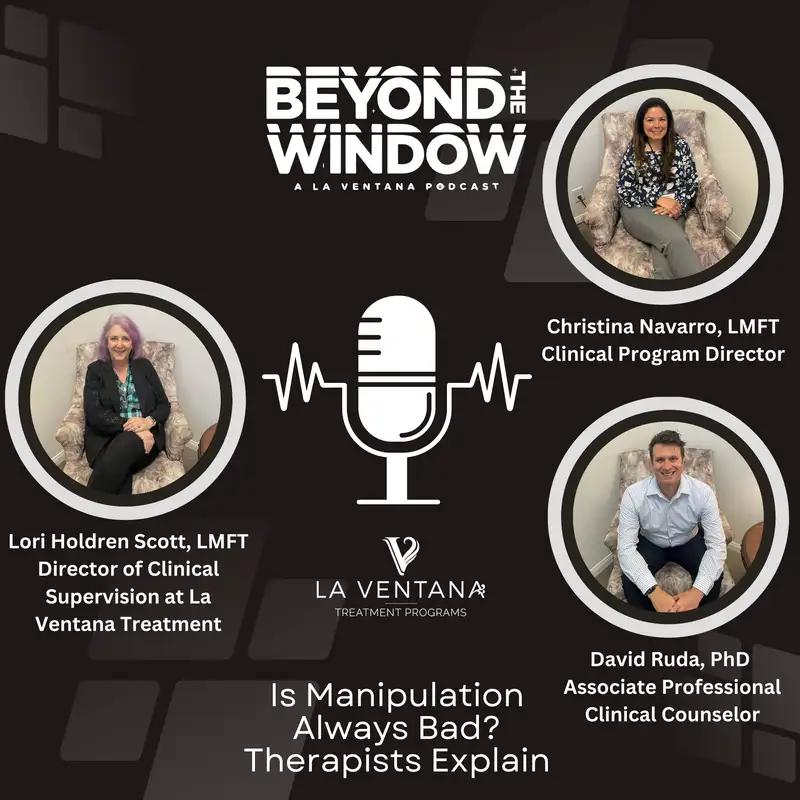
In this episode, we sit down with the clinical team from La Ventana’s Outpatient Programs (PHP/IOP) to tackle one of the most "charged" words in mental health and addiction treatment: Manipulation.
While often viewed through a negative lens, our clinicians—Lori Holdren Scott, Christina Navarro, and David Ruda—explore manipulation as a neutral, learned skill that begins in infancy as a way to have needs met. They discuss why clients (and all of us) use social influence to survive, how to distinguish between malicious intent and "maladaptive" coping, and how setting healthy boundaries can disrupt the cycle of manipulation in families and relationships.
Whether you are a clinician, a family member of someone in recovery, or simply curious about human behavior, this conversation offers a refreshing, non-judgmental look at how we all navigate the world to find connection and safety.
Episode Notes
Meet the Panel:
- Lori Holdren Scott, LMFT: Director of Clinical Supervision at La Ventana Outpatient.
- Christina Navarro, LMFT: Clinical Director for the Outpatient Program.
- David Ruda, PhD, APCC: Primary Therapist in the Outpatient Programs.
Key Highlights:
- The Origin of Manipulation: Why it starts as early as 12 months old and how it evolves from a survival skill into a social tool.
- Neutrality vs. Nefariousness: Comparing manipulation to "fire"—a tool that can be used to warm a home or cause destruction, depending on the intent.
- Substance Use & Survival: Understanding why manipulation is often a symptom of addiction and personality disorders, and why it shouldn't be taken personally by loved ones.
- The "Mean Girls" Dynamic: A deep dive into social influence using the "Regina George vs. Cady Heron" comparison—identifying transparent vs. insidious behavior.
- Clinical Benefits of Outpatient (PHP/IOP): Why group therapy provides a unique "360-degree view" of a client’s behavior that private practice often misses.
- Breaking the Cycle: How family systems can disrupt manipulative feedback loops through education, curiosity, and firm boundaries.
Top Takeaways for Listeners:
- Be Curious, Not Judgmental: When you feel manipulated, ask why the person feels they can't be transparent about their needs.
- Secrecy vs. Transparency: Manipulation becomes harmful when secrecy is involved; transparency allows both parties to maintain their autonomy.
- The Role of Social Media: How "influencer culture" is a modern form of mass manipulation and the importance of digital detoxing.
Connect with La Ventana Treatment Programs:
- Website: laventanatreatment.com
- Instagram: @LaVentanaTreatment
- Facebook: La Ventana Treatment Programs