All Episodes

Displaying 1 - 20 of 20 in total

#19

Karen Cormier Opens Up: The Moment That Changed Everything

Content note: This episode includes candid discussion of depression, grief, burnout and suicidal ideation. In this episode of Beyond the Window, La Ventana Clinical Director Jennifer Enriquez, LMFT, sits down with entrepreneur and mental health advocate Karen Cormier. Karen is a franchise owner with Team Referral Network who helps entrepreneurs grow their businesses through relationships. She is also a former La Ventana residential client who entered treatment in 2022 after cumulative grief, anxiety, depression and professional burnout left her unable to function. Karen openly shares what it felt like to reach rock bottom, step away from the business and people she cared for, and finally focus on her own healing. She and Jennifer explore the difficult work of residential treatment, the importance of continuing care and why recovery is not something a person simply completes. In this conversation: How cumulative grief and chronic burnout contributed to Karen’s mental health crisis The difference between staying busy and developing healthy coping skills What residential mental health treatment felt like during Karen’s first weeks Why grief does not follow a predictable timeline or a simple set of stages How pain and gratitude can exist at the same time The warning signs Karen now watches for when she is becoming overwhelmed Why boundaries, rest and turning off notifications are essential parts of her recovery Practical tools that supported her healing, including walking, time in nature, sound baths, grounding activities and community The importance of step-down care through PHP, IOP and continued support How friends can support someone who is struggling by taking meaningful action instead of waiting to be asked Karen’s emotional reaction to seeing a photograph from her first day in treatment The transformation from feeling lost and hopeless to becoming resilient, grateful and “perfectly imperfect” Karen’s story offers a powerful reminder that healing does not require perfection. It requires honesty, support, self-awareness and the willingness to keep putting one foot in front of the other. About the guest Karen Cormier is a franchise owner with Team Referral Network, an entrepreneur, connector and advocate for speaking openly about mental health. By sharing her experience with grief, burnout and treatment, Karen hopes others will recognize that they are not alone and that asking for help can be the beginning of getting their lives back. About Beyond the Window Beyond the Window is presented by La Ventana Treatment Programs. The podcast features honest conversations about mental health, trauma, substance use, recovery and the experiences that shape the healing process. Get support If you or someone you love is struggling with mental health challenges, trauma, substance use or co-occurring conditions, La Ventana Treatment Programs provides personalized treatment and multiple levels of care. Visit LaVentanaTreatment.com or call (800) 560-8518 for a complimentary clinical assessment. This podcast is intended for educational and informational purposes and is not a substitute for professional medical or mental health advice, diagnosis, or treatment.
#18

Kat on Making the Best of Bad Situations

From Skid Row to Nine Years Clean: Kat’s Recovery Story In this deeply personal episode of Beyond the Window, Danny sits down with Kat, a detox professional at La Ventana Treatment Programs, to hear her powerful story of addiction, homelessness, family separation, recovery, and rebuilding a life she once believed was out of reach. Kat shares how substance use gradually took over her life, leading to painful relationships, incarceration, losing custody of some of her children, and eventually finding herself on Skid Row while caring for her grandson. At age 52, she made the difficult decision to ask for help and begin again. Through shelters, recovery meetings, transitional housing, friendships, faith, and a strong support system, Kat slowly rebuilt her life one day at a time. Today, she has nine years of sobriety, renewed family relationships, a home, self-esteem, and a meaningful career helping others begin their own recovery journeys. This episode is a reminder that recovery is possible, even when life feels overwhelming. Kat’s message is simple: do not quit before the miracle. One phone call, one meeting, one conversation, or one decision can change the direction of a life. In This Episode, We Discuss:  How Kat’s substance use began and gradually escalated   The impact addiction had on her family and relationships   Her experience living on Skid Row with her grandson   The fear and humility involved in asking for help   Transitional housing, meetings, sponsorship, and community support   Starting over in recovery at age 52   Rebuilding trust with children and family members   Why Kat chose to work in detox and treatment   The importance of finding a recovery “tribe”   Encouragement for people in active addiction and their loved ones  Key Takeaway Recovery does not have to begin with having everything figured out. It can start with one step: calling someone, entering a meeting, accepting help, or choosing to keep going one more day. About La Ventana Treatment Programs At La Ventana Treatment Programs, we provide compassionate, personalized care for individuals struggling with substance use, mental health challenges, and trauma. Through individual therapy, group support, family involvement, detox, residential treatment, and structured levels of care, our team helps people take the next step toward healing. For more details about our process at La Ventana, call (800) 560-8518. Real people answer 8am–8pm, seven days a week.
#17

The Double Standards Women Face Every Day vs Reality

What happens when two independent female clinical directors pull back the curtain on the invisible emotional labor women carry every single day? In this powerful episode of La Ventana’s Beyond the Window podcast, hosts Carla Fernandez, LCSW, and Isabelle Pilato, LMFT, explore the complex realities of women’s mental health, leadership, and empowerment. From the historical weaponization of the term “hysterical” to modern pop-psychology trends like the “Let Them Theory,” Carla and Isabelle break down the everyday conditioning that teaches women to maintain everyone else’s emotional comfort at the expense of their own boundaries. Together, they dive deep into the professional and psychological hurdles women face when stepping out of traditional roles, bringing the clinical insights and the hard statistics to back it up. Whether you are navigating corporate spaces, family systems, or your own self-growth journey, this episode is a call to unlearn the pressure of playing small. In this episode, we discuss: The Language of Suppression: How labeling assertive women as “loud,” “crazy,” or “intimidating” is a modern extension of historical female suppression. The Caregiver Trap & Codependency: Why traditional family structures and cultural formatting condition women to be hyper-vigilant of others' feelings, leading directly to burnout, resentment, and identity erosion. Women in Leadership: Real talk on navigating imposter syndrome, breaking the habit of over-explaining, and ending the addiction to unnecessary apologies. The Receipts (The Statistics): A look at the disproportionate global rates of PTSD, anxiety, and eating disorders among women, as well as the societal anxiety surrounding physical aging. Redefining Strength: Why true empowerment means fewer explanations, zero apologies, and the courage to unapologetically take up space. About the Hosts: Carla Fernandez, LCSW, is a Licensed Clinical Social Worker and the Clinical Director with La Ventana Treatment Programs. Isabelle Pilato, LMFT, is a Licensed Marriage and Family Therapist and the Clinical Director for La Ventana’s Women’s Residential Treatment program. Connect with La Ventana Treatment Programs: If you or a loved one are struggling with mental health, trauma, or dependency issues and want to learn more about our trauma-informed, specialized recovery programs, please reach out to us. We have compassionate, real individuals ready to help seven days a week. 📞 Call Us: (800) 560-8518 (Available 8 AM – 8 PM) 🌐 Website: https://laventanatreatment.com 📺 Watch on YouTube: Tune in to watch video versions of our episodes on our official YouTube channel.
#15

The ADHD Advantage: What Most People Get Completely Wrong

Beyond the Window: The ADHD Advantage with Dr. Carol Kiriakos In this episode of Beyond the Window, Sharon Volner sits down with board-certified psychiatrist Dr. Carol Kiriakos to explore a powerful reframe of ADHD, not as a limitation, but as a unique cognitive advantage. Dr. Kiriakos shares insights from her clinical experience and her book The ADHD Advantage, breaking down how ADHD shows up across different stages of life, why it’s often misunderstood, and how individuals can learn to work with their brains instead of against them. This conversation goes beyond surface-level symptoms and dives into the deeper patterns behind attention, motivation, self-esteem, and performance. What You’ll Learn in This Episode  Why do many people with ADHD have high intelligence but struggle with consistency?   How ADHD impacts attention, focus, and decision-making   The concept of hyperfocus and why pressure can improve performance   How ADHD presents differently in children vs adults   Why ADHD often goes undiagnosed until later in life   The connection between ADHD, self-esteem, and rejection sensitivity   How ADHD can influence career paths, relationships, and daily life   The link between ADHD and substance use or self-medication   The truth about stimulant vs non-stimulant medications   Practical, behavioral strategies to manage ADHD without relying solely on medication  Key Insights from Dr. Kiriakos ADHD Is Not an Intelligence Problem Many individuals with ADHD are highly intelligent and creative. The challenge lies in attention regulation, not ability. Hyperfocus Is a Hidden Strength People with ADHD often perform best under pressure, using urgency and deadlines to activate deep focus and productivity. ADHD Evolves Over Time While hyperactivity may be more visible in childhood, ADHD in adults often shows up as overwhelm, inconsistency, and difficulty managing responsibilities. Compensation Can Mask ADHD Many individuals develop coping mechanisms early on, only to reach a breaking point later in life when demands increase. ADHD and Self-Esteem Are Closely Linked Repeated struggles despite high ability can lead to internal doubt and the question: “What’s wrong with me?” Practical Strategies for Managing ADHD  Use structured breaks to maintain focus and avoid burnout   Work during your most productive times based on your natural rhythm   Introduce controlled background noise to reduce internal distractions   Break large tasks into smaller, manageable segments   Use external tools like reminders, notes, or AI to support the organization   Create small rewards to stay motivated   Prioritize sleep, exercise, and overall balance  Medication vs Behavioral Approaches Dr. Kiriakos explains that ADHD treatment is not one-size-fits-all.  Stimulants may help improve focus and motivation for some individuals   Non-stimulant options can be beneficial, especially for those with anxiety or other conditions   Behavioral strategies are essential, whether or not medication is used   Proper treatment can reduce the likelihood of self-medicating with substances  Important Topics Discussed  ADHD medication shortages and access challenges   Misconceptions about ADHD in boys vs girls   The overlap between ADHD and other conditions, like anxiety, OCD, and autism spectrum traits   How ADHD can impact communication and social interactions  Who This Episode Is For  Adults who suspect they may have ADHD   Parents are trying to better understand their child’s behavior   Professionals struggling with focus, consistency, or overwhelm   Anyone interested in mental health, performance, and productivity  Learn More About La Ventana For more details about our process at La Ventana, call us at (800) 560-8518. We pride ourselves on real people picking up the phones seven days a week from 8 am to 8 pm. Final Thought ADHD isn’t just about distraction. It’s about how the brain prioritizes, processes, and responds to the world. When understood and managed correctly, it can become a powerful advantage rather than a limitation.
#14

Is Manipulation Always Bad? Therapists Explain

In this episode, we sit down with the clinical team from La Ventana’s Outpatient Programs (PHP/IOP) to tackle one of the most "charged" words in mental health and addiction treatment: Manipulation. While often viewed through a negative lens, our clinicians—Lori Holdren Scott, Christina Navarro, and David Ruda—explore manipulation as a neutral, learned skill that begins in infancy as a way to have needs met. They discuss why clients (and all of us) use social influence to survive, how to distinguish between malicious intent and "maladaptive" coping, and how setting healthy boundaries can disrupt the cycle of manipulation in families and relationships. Whether you are a clinician, a family member of someone in recovery, or simply curious about human behavior, this conversation offers a refreshing, non-judgmental look at how we all navigate the world to find connection and safety. Episode Notes Meet the Panel: Lori Holdren Scott, LMFT: Director of Clinical Supervision at La Ventana Outpatient. Christina Navarro, LMFT: Clinical Director for the Outpatient Program. David Ruda, PhD, APCC: Primary Therapist in the Outpatient Programs. Key Highlights: The Origin of Manipulation: Why it starts as early as 12 months old and how it evolves from a survival skill into a social tool. Neutrality vs. Nefariousness: Comparing manipulation to "fire"—a tool that can be used to warm a home or cause destruction, depending on the intent. Substance Use & Survival: Understanding why manipulation is often a symptom of addiction and personality disorders, and why it shouldn't be taken personally by loved ones. The "Mean Girls" Dynamic: A deep dive into social influence using the "Regina George vs. Cady Heron" comparison—identifying transparent vs. insidious behavior. Clinical Benefits of Outpatient (PHP/IOP): Why group therapy provides a unique "360-degree view" of a client’s behavior that private practice often misses. Breaking the Cycle: How family systems can disrupt manipulative feedback loops through education, curiosity, and firm boundaries. Top Takeaways for Listeners: Be Curious, Not Judgmental: When you feel manipulated, ask why the person feels they can't be transparent about their needs. Secrecy vs. Transparency: Manipulation becomes harmful when secrecy is involved; transparency allows both parties to maintain their autonomy. The Role of Social Media: How "influencer culture" is a modern form of mass manipulation and the importance of digital detoxing. Connect with La Ventana Treatment Programs: Website: laventanatreatment.com Instagram: @LaVentanaTreatment Facebook: La Ventana Treatment Programs
#13

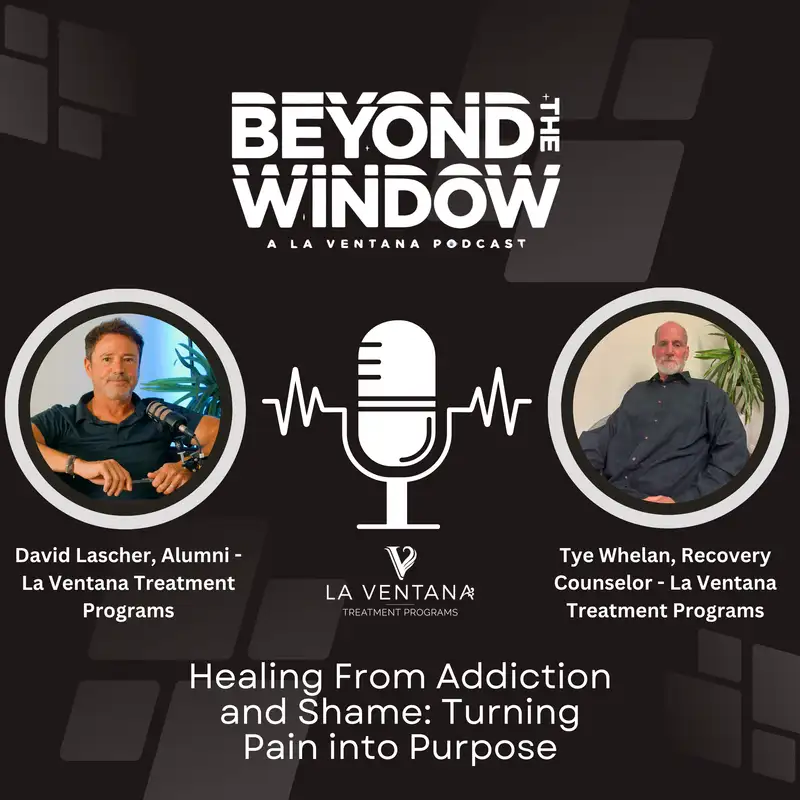
Healing From Addiction and Shame: Turning Pain into Purpose

In this powerful episode of Beyond the Window, host David Lascher sits down with counselor and longtime recovery mentor Tye Whelen to explore what real change in recovery actually looks like. David shares his journey of returning to sobriety after a relapse and how approaching recovery differently the second time led to a deeper transformation. Together, he and Ty break down the process of change through the 12 Steps, focusing especially on steps four through nine and the life-changing power of doing the work rather than just understanding it intellectually. They discuss how unresolved shame, fear, and childhood experiences can shape addictive behaviors and how the inventory process helps uncover the underlying patterns that keep people stuck. Through honest conversation, they explore how writing things down, identifying character defects, and taking responsibility can create the awareness needed to heal. The episode also dives into topics such as: • Why real recovery requires a complete personality change • The difference between intellectual understanding and lived experience in recovery • How resentment, fear, and shame drive destructive patterns • Why connection is the true antidote to addiction • The role of heart-brain coherence and emotional healing in recovery • How self-forgiveness, healthy boundaries, and self-care help repair the past • Turning painful life experiences into purpose by helping others Tye explains how many of the struggles people face in addiction stem from deep, unresolved shame and insecure attachments, and how the recovery process allows individuals to rebuild healthy connections with themselves and others. The conversation ultimately highlights one of the most powerful ideas in recovery: your past does not have to be your burden. It can become your greatest asset. This episode is a thoughtful and honest look at what it really takes to change, heal, and build a meaningful life in sobriety.
#12

From Party Girl to Therapist: The Concert That Felt Like Therapy

What happens when a concert becomes more than entertainment: it becomes an experience that makes people feel seen? In this episode of Beyond the Window, hosts Sharon Wner and Jennifer Enriquez sit down with Carrie Simmons, LMFT, a clinician-turned-musician whose story blends recovery, creativity, and self-mastery in a way that’s both raw and inspiring. Carrie shares her journey from a rebellious, angry teen searching for belonging to navigating addiction, reinvention, and sobriety: all while building a creative life in Los Angeles. Along the way, she recounts a bold Hollywood moment that says everything about her personality: pulling over on Sunset Boulevard to rap for Dr. Dre. The conversation also explores how Carrie uses music and performance to create a safe, welcoming space where people can feel connected, drop the mask, and remember they’re not alone. This is a powerful episode about turning pain into purpose, embracing vulnerability, and building a life rooted in truth, community, and hope. In This Episode, We Cover Clinician to musician: how Carrie’s path evolved The Whiskey a Go Go show that felt “therapeutic” to the audience Identity, belonging, and finding your voice Addiction, sobriety, and the work behind long-term change Why vulnerability, community, and spiritual discipline matter in healing Turning pain into purpose, and using creativity to give back Guest Links: Carrie Simmons Instagram: @carriesimmonsofficial Website: carriersimmonsofficial.com YouTube: Carrie Simmons Channel About Beyond the Window Beyond the Window is a podcast from La Ventana Treatment Programs, featuring conversations about mental health, recovery, and real stories of transformation. La Ventana Treatment Programs Learn more: loveatreatment.com Disclaimer This episode is for educational and informational purposes only and is not a substitute for professional medical or mental health advice.
#10

Why Your Child's Behavior Isn’t Personal with Dr. Bahareh Talei, Psy.D.

Why do our children's actions trigger us so deeply? Our CCO, Sharon Volner, LMFT sits down with renowned clinician Dr. Bahareh Talei, Psy.D. for a game-changing conversation that flips the script on parenting. We explore the profound idea that our kids' behavior is often not a personal attack, but a mirror reflecting our own unmet needs and childhood wounds. Dr. Talei offers her direct, compassionate wisdom on how to break the cycle of projection, stop taking things personally, and learn to parent the child you actually have—not the one you're trying to heal through. We tackle tough topics like setting boundaries without guilt, why doing your teen's homework (or college applications) hurts them, and how to move from reactive parenting to responsive understanding. This episode is a must-listen for any parent, guardian, or caregiver who wants to build a healthier, more resilient relationship with their child—whether that child is 15 or 50. Key Topics: Why we take our children's behavior personally Healing your own wounds so you don't pass them on The danger of over-involvement (helicopter parenting) The importance of letting kids fail (especially in middle school!) How to model emotional regulation and accountability Practical steps to parent from a place of understanding, not reaction Find Dr. Bahareh Talei, Psy.D. https://www.centerdcs.com/ https://www.hiveofhope.org/ Learn more about our treatment programs: https://laventanatreatment.com/
Previous Page

Displaying 1 - 20 of 20 in total

Next Page